2026-11-01 ~ 2026-11-24
The stand's design, STEP files, and STL files are licensed under CC BY 4.0 (Creative Commons Attribution 4.0 International Public License).
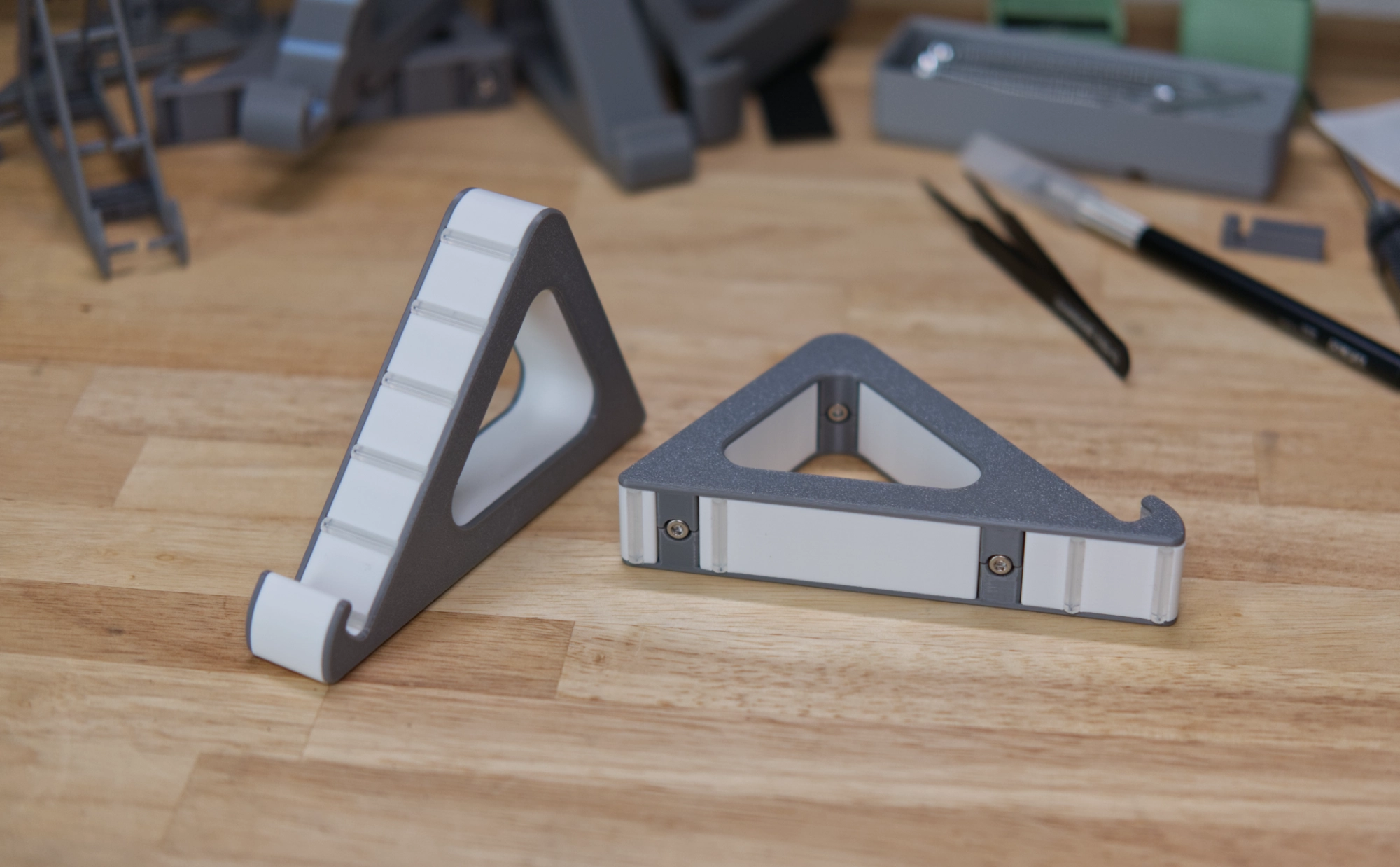
This is a project log for my 3D printed tablet stand. To assemble a pair, you need a silicon tube of 4mm outer diameter, 6x M3x10mm socket head screws, and 6x M3 square nuts (5.4mm x 5.4mm x 2.6mm±2mm).
Final design
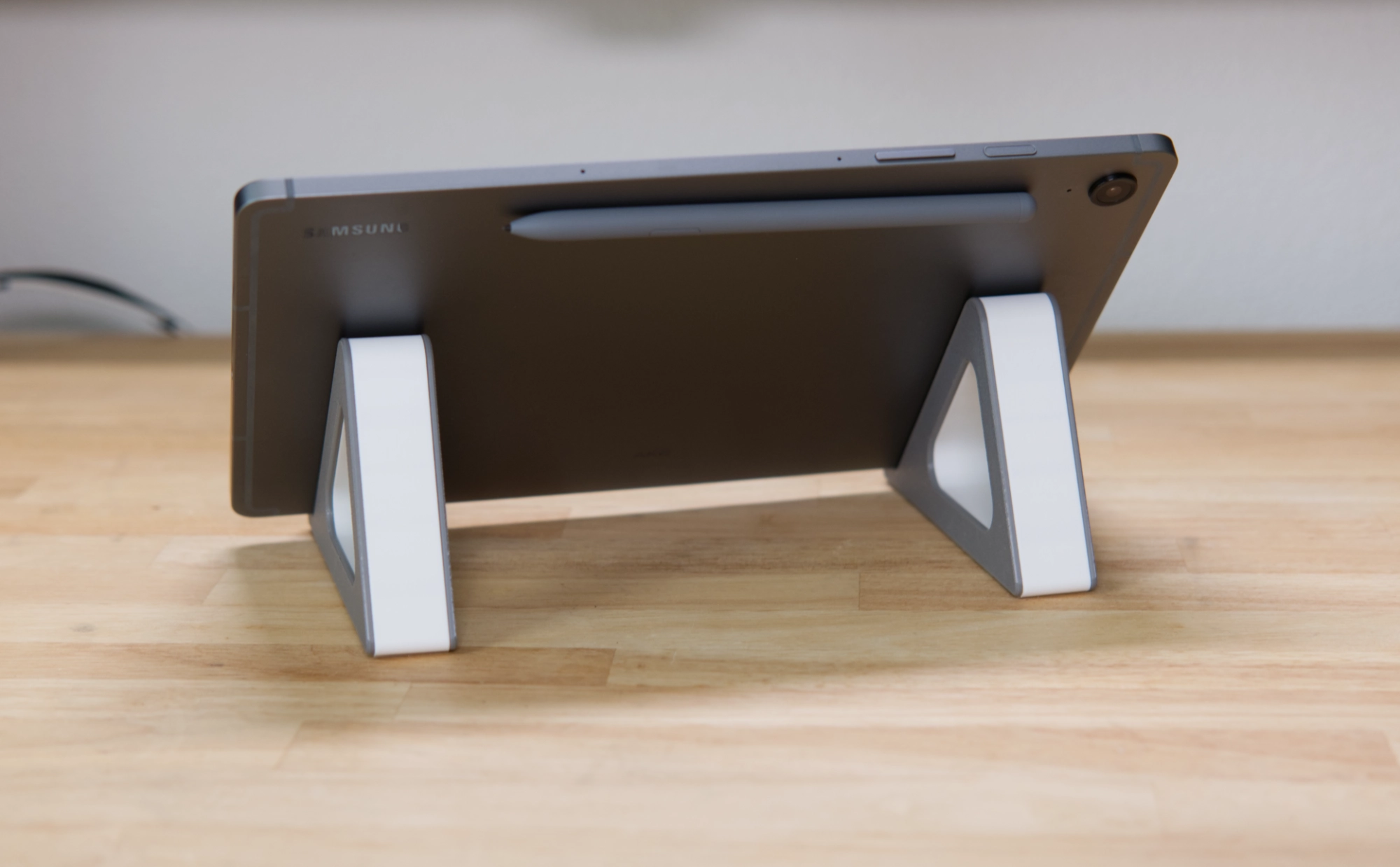
The design consists of a pair of slightly undersized fixed-angle base with silicon tubes at contact surfaces.
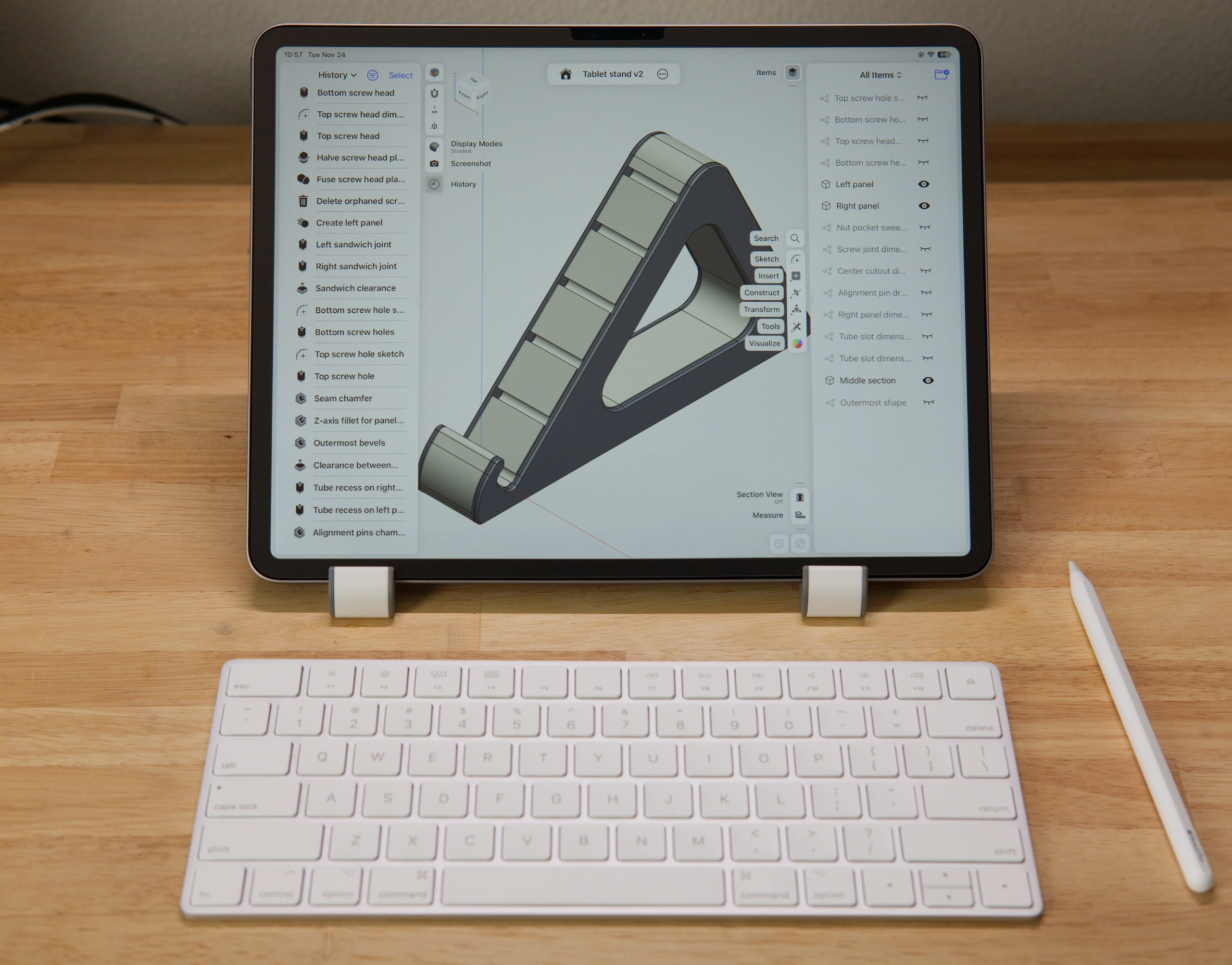
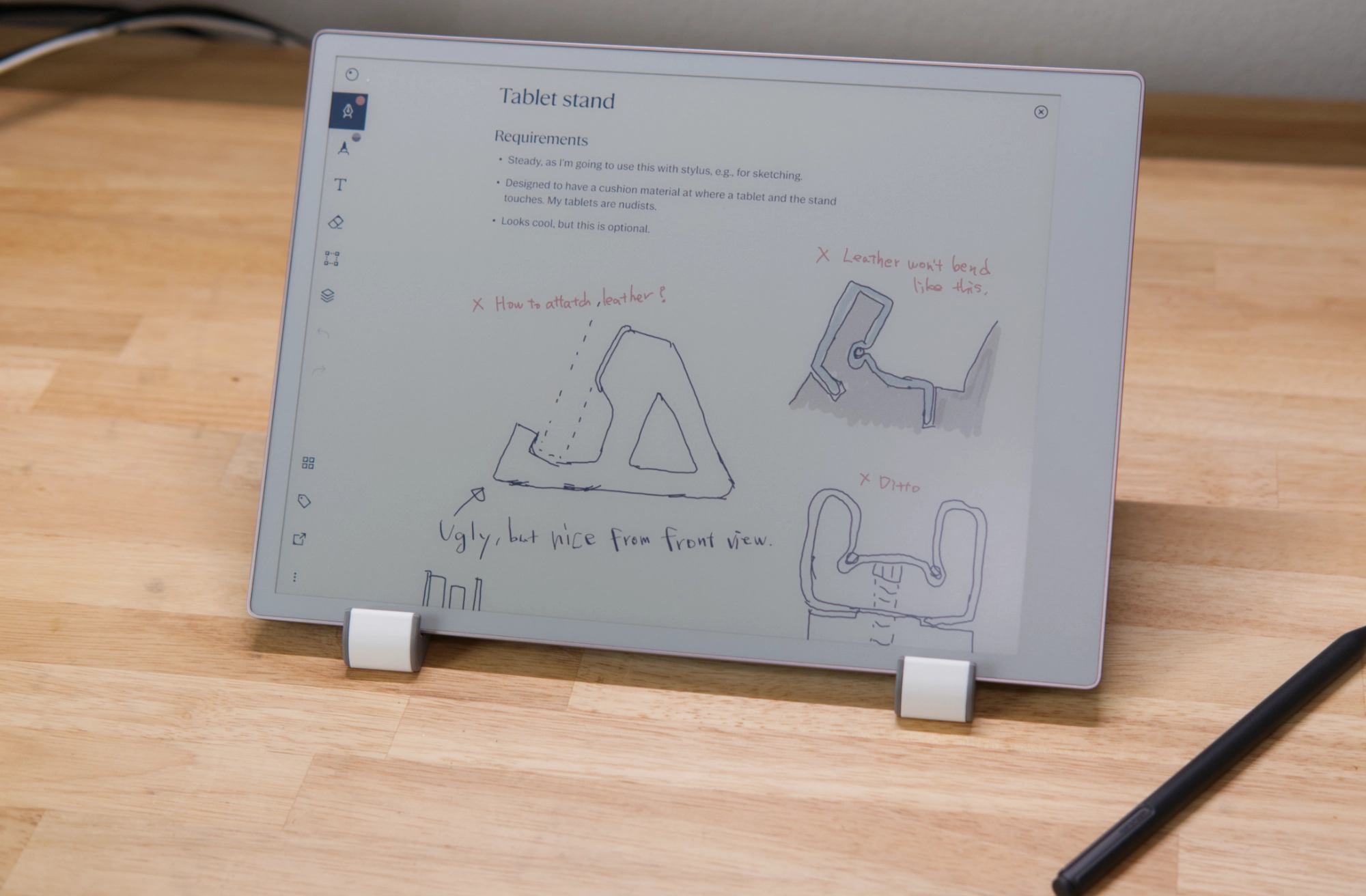
They are slightly undersize to keep footprints small. Because of this, applying strong pressure near screen top lifts the stands. However, as far as I tested, it doesn't occur under normal usage.
Thanks to silicon tubes, the stand won't slide even with moderately hard press (except near the top.) On the other hand, this strong holding force make it difficult to make small adjustments. As my main usage is "relatively long duration of pen input session," this is not an issue for me though.
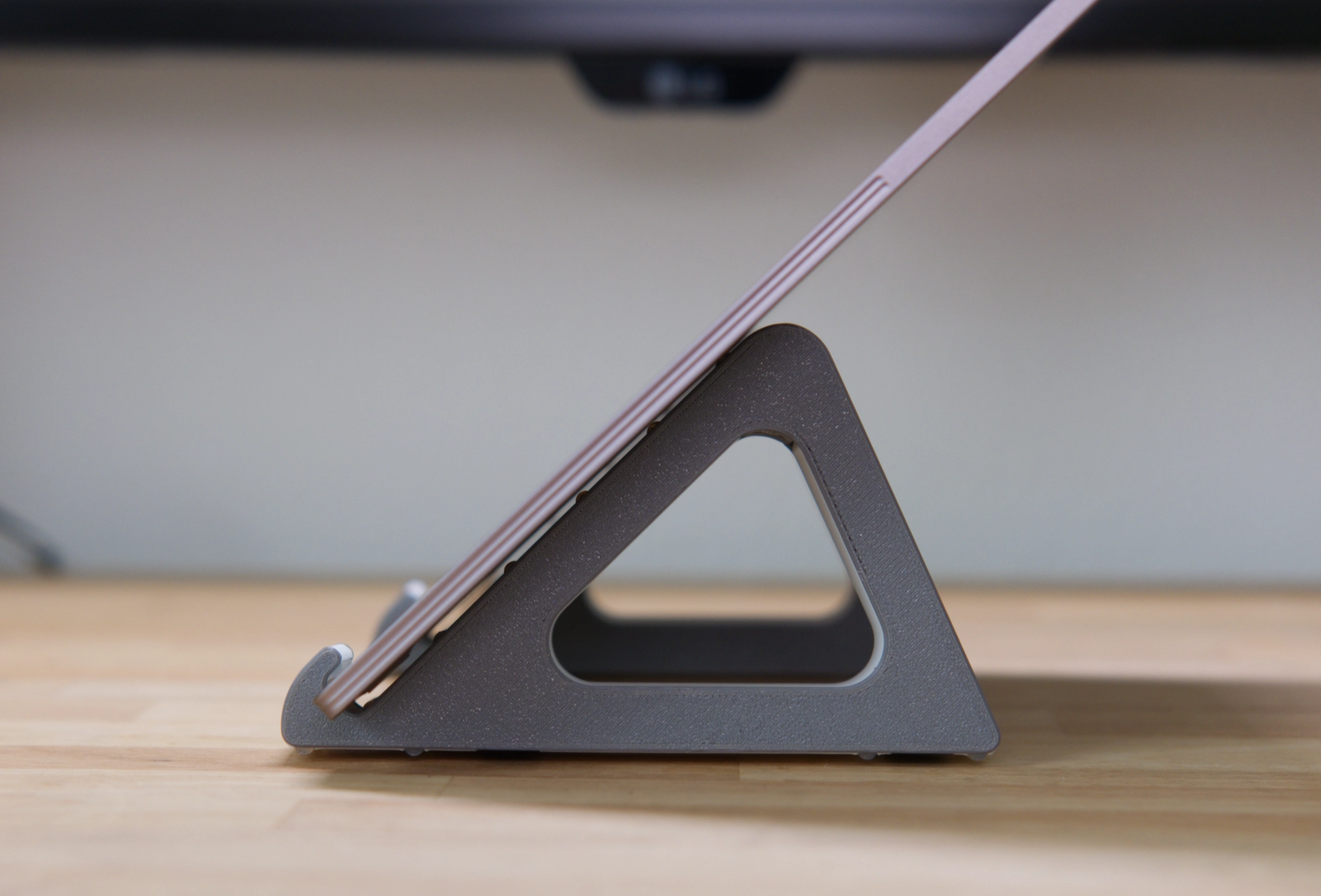
I believe silicon tubes is the best choice for this:
- they are widely available in consumer market.
- inexpensive.
- undyed form is the most common, so no worry for color bleeding.
There are small flaws in this design, such as the front section of side panels is bit loose and bottom silicon tubes attract worktop dust. I have workarounds for those (squeeze the side panels when gaps became visible, clean the bottom tubes regularly,) so this is near-perfect design for me, but YMMV.
Motivation
I was looking for a tablet stand for iPad Air 13 inch and reMarkable Paper Pro, that can securely hold these tablets at comfortable angle for stylus operations.
While there are many tablet stands out there, whether mass-manufactured or print-your-own, none of those satisfies my requirements. Some 3D printable models have adjustable angle (via editing the model) and steady body, but letting FFF (Fused Filament Fabrication) printed surfaces made of hard-plastic touch tablet's body is no-no for me.
There are soft FFF materials for sure, but I'm not smart enough to know which one is color bleeding safe. Also these materials are usually hygroscopic, which is problematic here because of high humidity.
It's just a tablet stand so must be easy to design, at least I thought.
Ideas didn't work
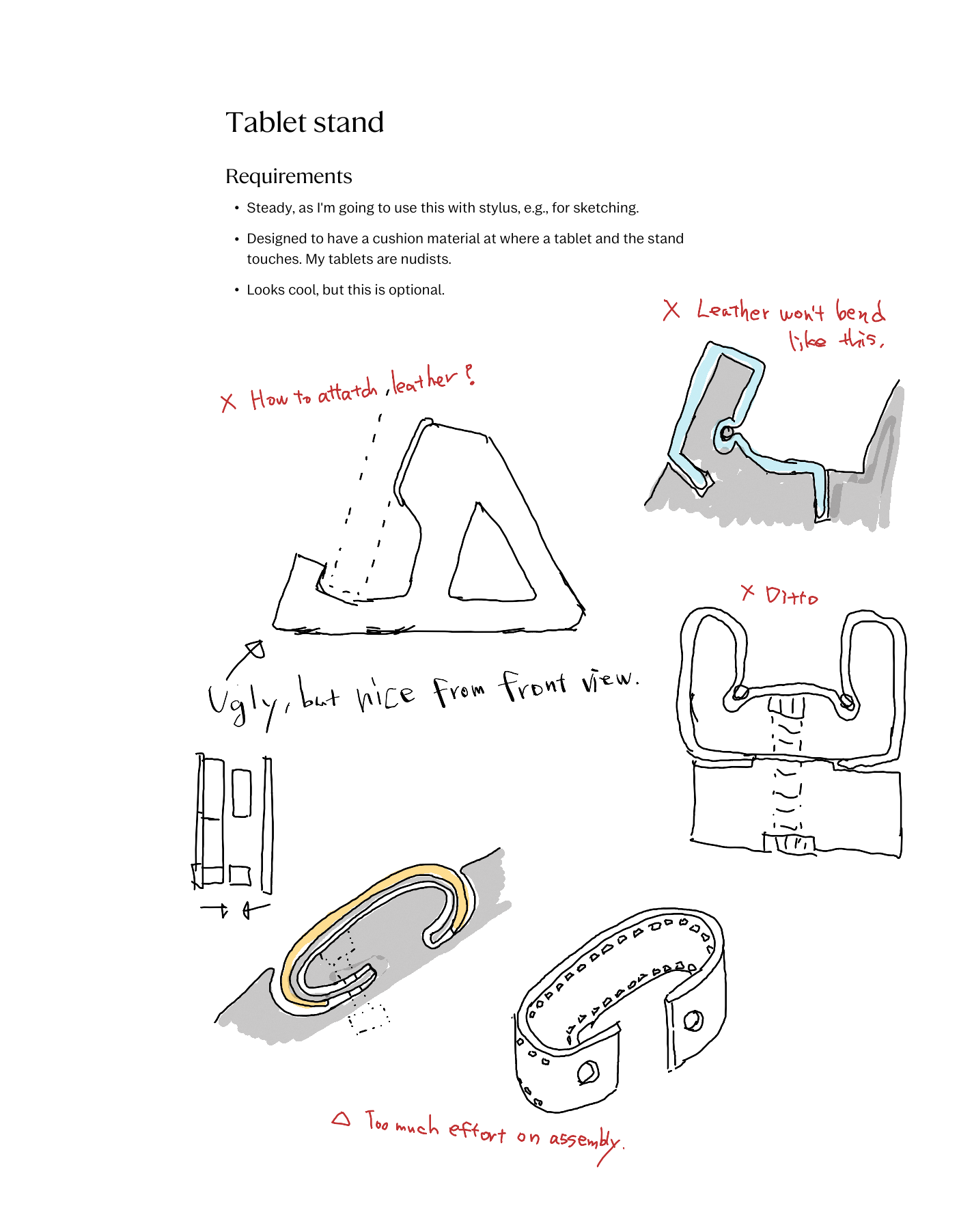
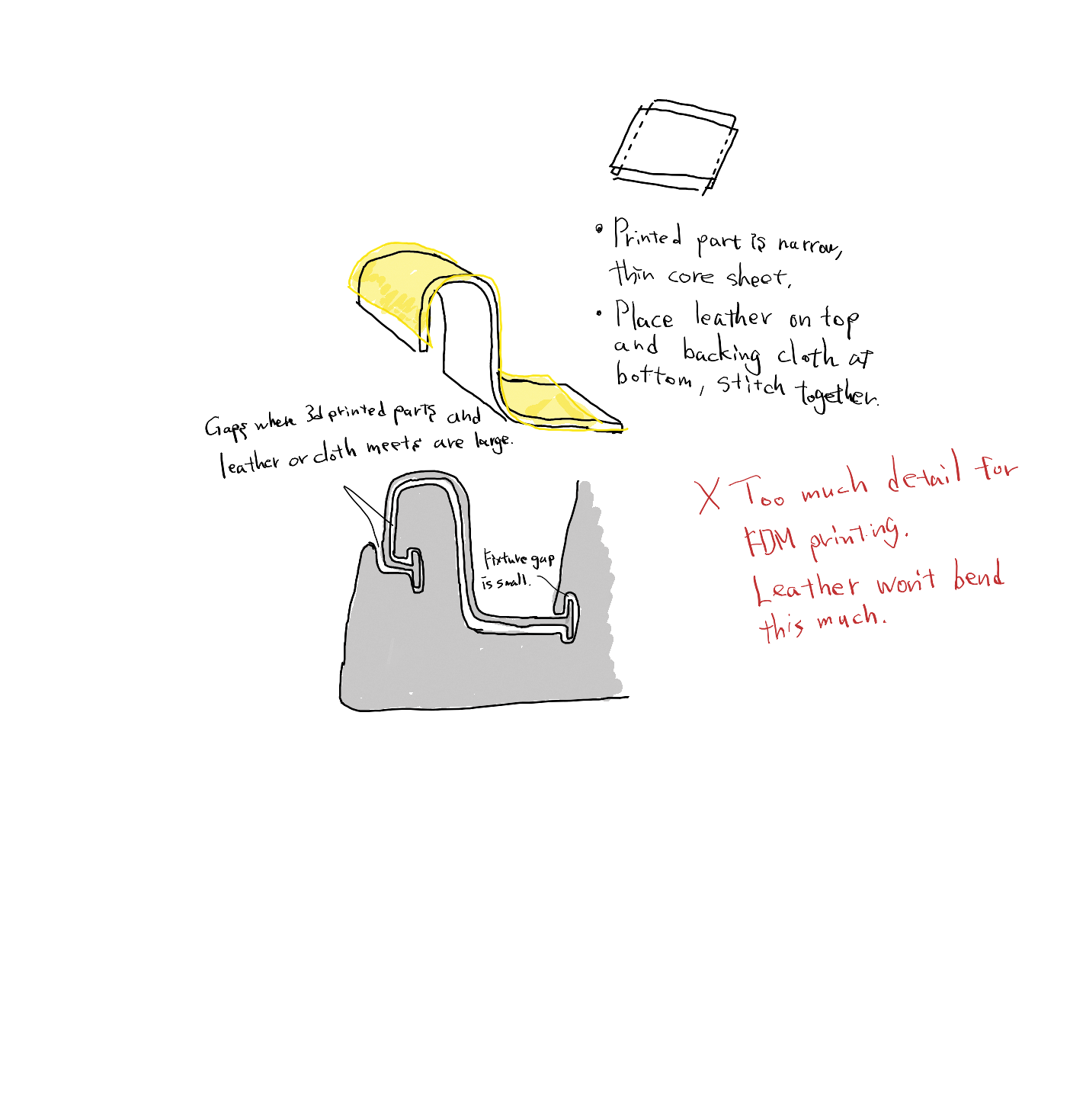
My initial plan was to use a leather for contact surfaces. This didn't work as the parts are so small; it's difficult to form a small corner using a leather. Also stitched section occupies significant area, so the contact surface will be rounded (more like a rod rather than a pad.)
The next material I tried was a textured PVC sheet (a "fake leather".) They can be ridiculously thin and stretched easily. I placed it on fitting test prototype then used for few days. The result was not good:
- It's pigment slightly transfered to tablets' back. I managed to get rid off with them, though.
- Due to its thinness, it did not provide enough impact resistance.
- I hate "fake" thingy.
After dismissing the PVC idea, I remembed there are unused PTFE tubes I purchased for 3D printers, inside my drawers. They are not stained or painted, and they are softer than FFF plastics.
It took several prints to get to the right dimension, but in the end, tubes fitted well. However the tubes are not soft enough for this purpose especially being squeezed (due to zero-tolerance slots,) and sharp edges sometimes scratch back of a tablet.
I then found a silicon tube sold online, which is way softer and undyed.
Sketches
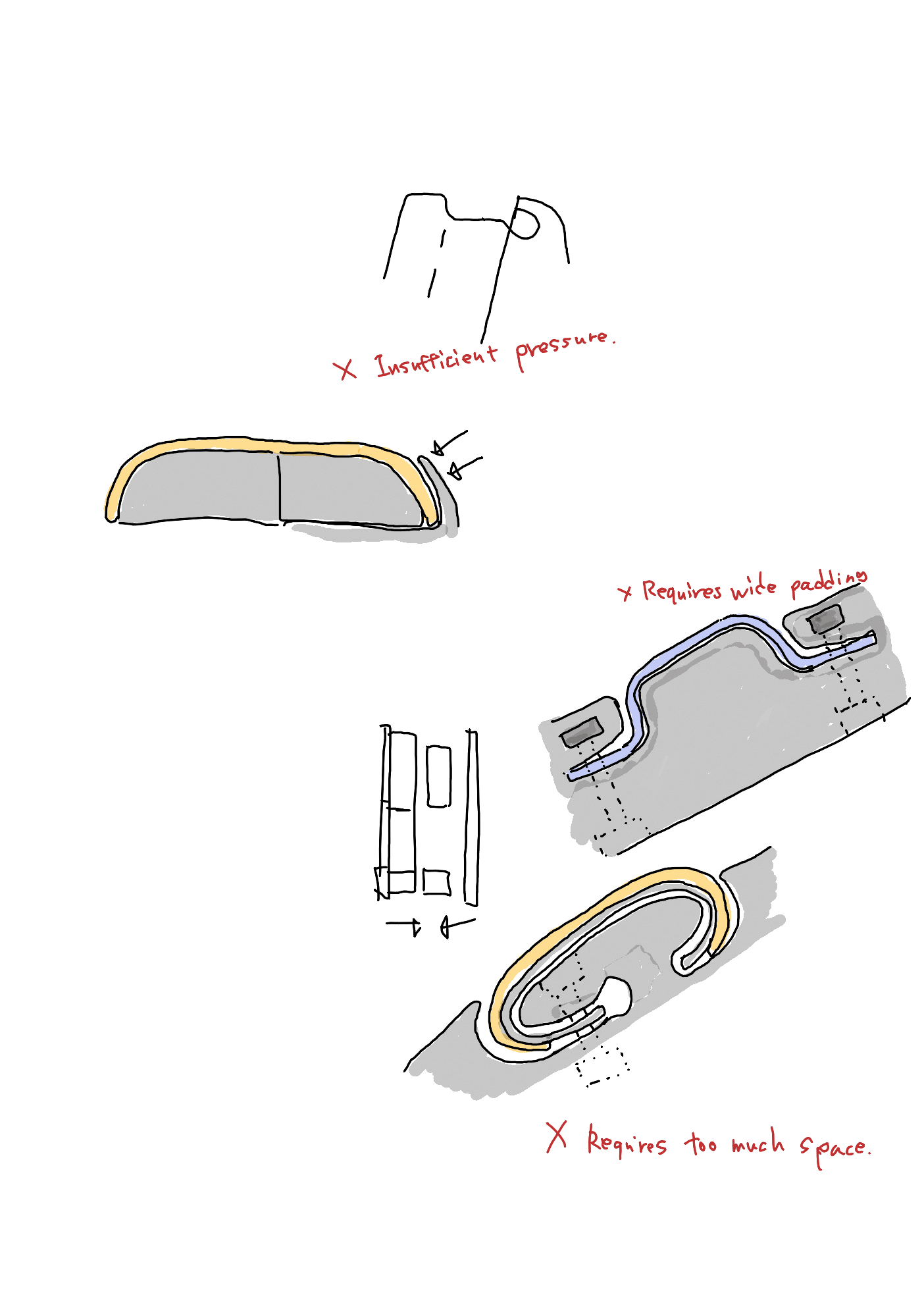
Here are 2D/3D sketches including obsolete, mostly non-working versions. Learn from my mistakes.